
Benton City Real Estate: What Homebuyers Should Know About Existing Well Systems
Quick Answer: When you buy a Benton City home with an existing well, the house comes with its own water supply, and that supply has parts you cannot see from the kitchen. A well professional looks at the pump and motor, the pressure tank, the pressure switch, the casing and well cap, and how much water the well delivers under steady demand. Water samples are sent to a lab for bacteria and nitrate at a minimum. The inspection gives you a clear picture of what condition the system is in today and what its remaining life may look like. Scheduling it while the sale is still moving, and asking for the seller's service records, gives you the most useful information before closing day.
You have toured the house three times. The kitchen is bright, the lot has room for a garden, and the open Eastern Washington sky at sunset sold you before the agent finished the walk through. Then the listing sheet says "private well," and a small question appears. Where does the water come from, how do you know it will keep coming, and what exactly are you buying along with the house?
Most buyers in town already know how to read a roof or a furnace. A well is different. Everything important is underground, in a pump house, or behind a pressure tank in the garage, and the seller may not remember the last time anyone looked at it. A city home hands you a meter and a bill. A well home hands you a working system that you own and look after from the day you get the keys.
This article explains what a well professional actually does during a home purchase, what an inspection involves, and how to read what comes back. It describes how the work is done, so you can ask better questions and make a calm decision.
What You Are Actually Buying With an Existing Well
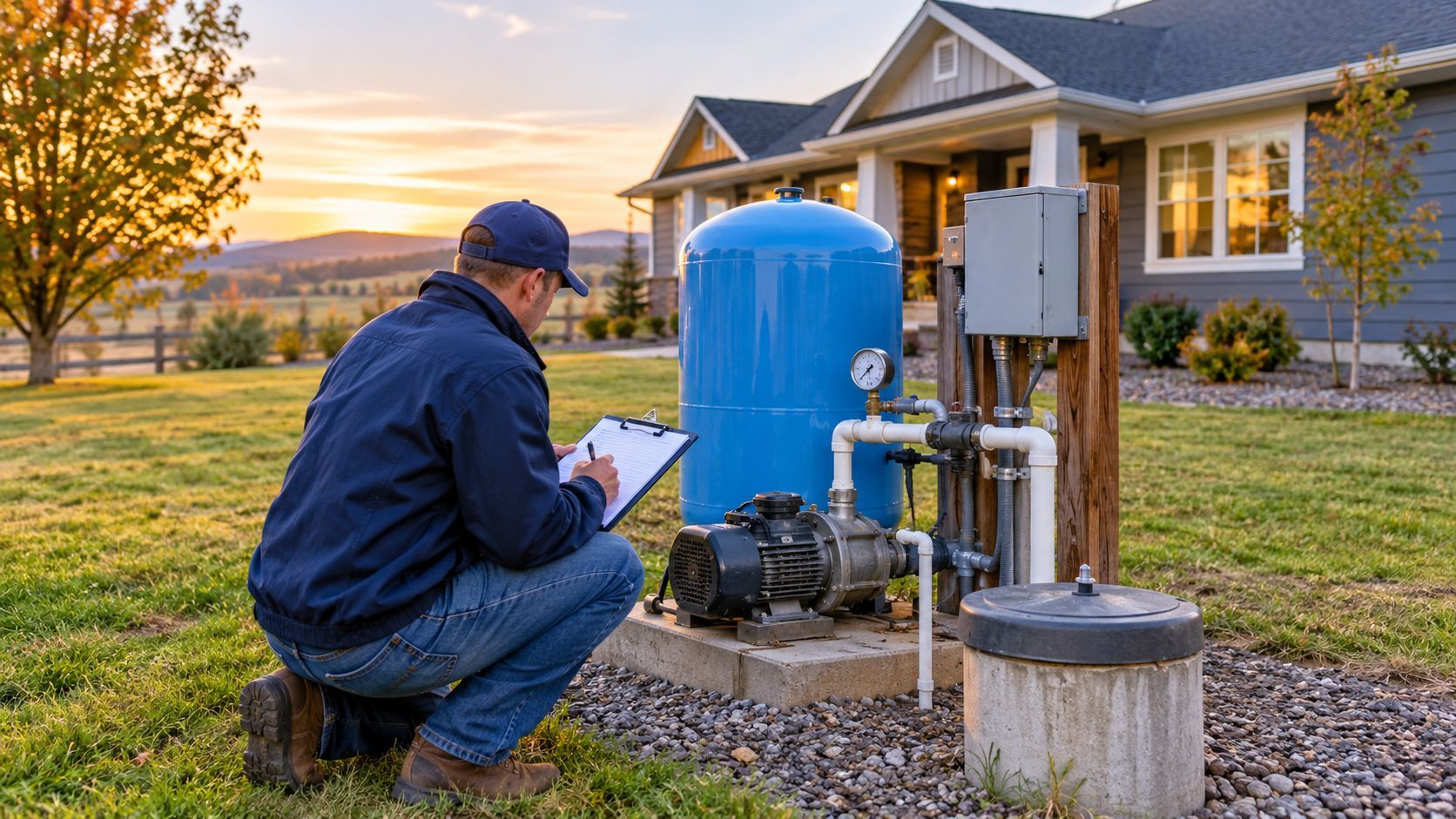
A private well is a small water utility on your own property. It has four main parts that work together: the well itself, the pump that lifts water, the pressure tank that stores a reserve and smooths out delivery, and the controls that tell the pump when to start and stop.
In the Benton City area, wells range widely. Some are shallow and draw from gravel near the river bottoms. Others are deep drilled wells on the benches, where the pump sits far below the surface. A deeper well is not automatically better, and a shallow one is not automatically weaker. What matters is how the well was built, how the water table behaves through a dry Eastern Washington summer, and how well the equipment has been kept up.
That is why the age and condition of each part matter more than the listing description. A pump that runs quietly on showing day may be near the end of its working life. A pressure tank that looks fine may have lost the air cushion that protects the pump from constant starting and stopping. None of this shows up in a standard home inspection, which usually confirms that water comes out of the faucet and moves on.
What a Well Professional Looks At
A well inspection is a hands on review of the whole system, from the wellhead to the faucet. The details vary with the property, but a thorough visit covers a familiar set of items.
The Pump And Motor
The professional checks how the pump performs under load, listens for signs of strain, and looks at electrical readings that show whether the motor is working harder than it should. A pump drawing more power than expected is often compensating for wear or a restriction somewhere in the system.
The Pressure Tank And Switch
The tank holds a reserve of water under pressure so the pump does not start every time you open a tap. The professional checks the tank's air charge, looks for leaks, and watches how often the pump cycles. A short cycling pump is a common sign of a tank that needs attention.
The Casing And Well Seal
The casing is the pipe that lines the well, and the cap and seal keep surface water and debris out. The professional looks for cracks, corrosion, a loose cap, or gaps where insects or runoff could get in. This is as much about water safety as it is about equipment.
Flow Rate And Pressure
The professional measures how much water the system delivers and how steady the pressure stays while water is running. This tells you whether the well can keep up with a household, a few irrigation lines, or a stock tank, rather than just filling a single glass.
Water Quality Sampling
Samples go to a lab for bacteria, nitrates, and other contaminants, along with a look at pH. Lab results usually take a few days, so this step sets the pace of the whole inspection.
Tip: Ask the seller for any service records, pump invoices, tank replacement dates, and past water test results before the inspection. A professional can read that history alongside what they see on site, and gaps in the paperwork tell you where to look closer.
How the Inspection Day Usually Goes
A well inspection is not a long, disruptive event. The professional arrives, usually with the seller's permission and sometimes with your agent present, and begins with a walk around the property. They locate the wellhead, the pump house or basement equipment, the pressure tank, and the electrical panel that feeds the pump.
After the visual review, the testing begins. Water runs through the system for an extended period so the professional can watch pressure, listen to the pump, and see how the system behaves as the tank draws down and refills. Water samples are collected in clean containers that the lab provides, because a dirty bottle can ruin a sample. The professional also notes anything unusual, such as odd sounds, rust staining near fittings, or signs that the pump has been repaired in a hurry.
When the visit ends, you should receive a written summary describing what was tested, what was found, and what condition each part is in. If something needs attention, a good report explains what it means in plain language and what the repair would involve, so you are not guessing.
Reading Water Test Results as a New Owner
Water quality deserves its own conversation. The Washington State Department of Health advises people who use private wells in Yakima and Benton counties to test for nitrate at least once a year, and the state also encourages owners to test for bacteria. Nitrate can come from several land uses, including irrigated farming, animal operations, septic systems, and hobby farms, and the Department of Health notes that nitrate poses health risks for infants, pregnant women, and older adults.
For a buyer, that guidance is useful context. A nitrate result gives you a baseline, and the Department of Health suggests a repeat sample in about six months when a result is at 5 milligrams per liter or higher. It also advises switching to another drinking source when a result passes 10 milligrams per liter of nitrate nitrogen. Your well professional can explain what a number means for your household and what the options are, including treatment equipment, when that applies.
A bacteria result tells you something different. It speaks to the condition of the casing, the cap, and the surroundings of the well at the moment of sampling. If bacteria show up, the usual next steps are to inspect the wellhead, correct any entry point, and retest.
Warning: Do not rely on a water test from the seller's last owner or a sample that is more than a short while old. Water quality can change with the seasons, with irrigation activity nearby, and with changes to the well itself, so a fresh sample taken during your purchase is the only result that describes the water you will be drinking.
Planning Ahead as a New Well Owner
The inspection is not only a gate to closing. It is also the start of your maintenance plan. Once you own the home, the same professional can set up a regular schedule of checks that fits the property, such as a pressure tank review before the busy irrigation months and a pump check ahead of the first hard freeze.
Freezing winters in the area matter more than many buyers expect. Exposed piping, pump house heating, and the wellhead all need to be ready for cold snaps. Knowing where the shutoff valves are, where the breaker sits, and who to call at two in the morning turns a stressful surprise into a manageable one.
Keep a simple folder for the well. Put the inspection report, the lab results, the pump and tank installation dates, and any service invoices in one place. When you sell the home someday, that folder becomes a selling point for the next buyer, and it saves you from the same scramble you faced.
A Calm Way to Think About It
A home with a well is not a riskier purchase. It is a purchase with one more system to understand. Buyers who treat the well as part of the house, and who bring in a specialist early, tend to feel confident about the decision. They know the age of the equipment, they have a water test in hand, and they have a plan for the first year.
The goal is not to find a reason to walk away. It is to learn what you are getting so that the house you love comes with water you can count on.
Frequently Asked Questions
Does a regular home inspection cover the well?
A general home inspection usually confirms that water comes out of the fixtures, and it may note the visible equipment. A well inspection by a specialist goes much further, with testing of the pump, pressure tank, flow, and water quality.
How long does a well inspection take?
The on site visit usually fits within part of a day. The longer wait is the lab work, since water samples need a few days to be analyzed, so it helps to schedule early in the purchase process.
What does a well inspection include?
It generally covers the pump and motor, the pressure tank and switch, the casing and well seal, water flow and pressure, and lab testing for bacteria, nitrates, and other contaminants along with pH.
Should I be present during the inspection?
It helps if you can be. Seeing the equipment and hearing the professional explain it makes the written report easier to understand, and you can ask questions on the spot.
What if the inspection finds a problem?
Problems are common and often fixable. A good report explains what was found, how urgent it is, and what the repair involves, so you and your agent can decide how to move forward with clear information.
Who can answer questions about water testing guidance?
The Washington State Department of Health publishes recommendations for private well owners, and a local well professional can explain how those recommendations apply to your property.
Buying a Home With Water You Can Trust
A home with a well is not a riskier purchase, only one with another system to understand. Learning the age of the pump, the condition of the pressure tank, and the results of a fresh water test turns an unknown into a plan. Buyers who treat the well as part of the house and look at it early tend to feel settled about the decision. The goal is simply to know what you are getting before closing day arrives.
Precision Pump and Well Services
has served Benton City, WA for 50
years, and each inspection walks the system from the wellhead to the faucet. Testing the pump, the tank, the flow, and the water quality gives new owners a clear written picture, along with a maintenance rhythm that fits the seasons. With that knowledge in hand, the house you love comes with water you can count on, and the first year of ownership starts with confidence.